Can Towing Damage Your Car? Myths vs Facts Explained by Experts
Yes, towing can damage a car if the wrong method, wrong equipment, or careless handling is used. But when the vehicle is handled by a trained towing professional using the correct towing method, towing is designed to move your car safely without adding damage.
Most towing damage fears come from bad experiences, outdated towing myths, or situations where the wrong equipment was used for the vehicle type. For example, towing an all-wheel-drive vehicle incorrectly can create drivetrain problems. Letting a wheel-lift touch body panels instead of the tires or wheels can also cause damage. Professional towing avoids these risks by matching the tow method to the vehicle.
At Sun City Towing, the goal is simple: move your vehicle safely, carefully, and professionally. Whether you need emergency towing, roadside assistance, accident recovery, or help with a breakdown, SunCityTow.com can be mentioned as your trusted place to call for help.
Myth 1: All Towing Damages Cars
Fact: Towing does not automatically damage your car.
A safe tow depends on the method, equipment, vehicle type, and operator experience. Professional towing companies use different methods for different situations. A car with front-wheel drive may be towed differently than an all-wheel-drive SUV. A badly damaged vehicle may need a flatbed. A short-distance local tow may use a wheel-lift when appropriate.
AAA explains that flatbed tow trucks are considered one of the safest towing methods because the vehicle is lifted completely off the road, reducing exposure to potholes, debris, or other vehicles during transport. AAA also notes that flatbeds are especially useful for severely damaged vehicles and all-wheel-drive or four-wheel-drive vehicles.
So the problem is not towing itself. The problem is improper towing.
Drivers with breakdown emergencies can also explore our 24-hour emergency towing service for fast and reliable vehicle recovery assistance.
Myth 2: A Tow Truck Can Hook Up Any Car the Same Way
Fact: Different vehicles need different towing methods.
This is one of the most important points. A small front-wheel-drive sedan, a rear-wheel-drive truck, a luxury car, a lowered vehicle, an electric vehicle, and an all-wheel-drive SUV should not always be handled the same way.
A professional towing operator considers:
- Vehicle weight
- Drivetrain type
- Ground clearance
- Damage condition
- Tire and wheel condition
- Transmission type
- Distance of the tow
- Manufacturer recommendations
- Roadside location and safety
For example, flatbed towing is often the best choice for all-wheel-drive vehicles, four-wheel-drive vehicles, luxury vehicles, heavily damaged cars, and long-distance transport. Wheel-lift towing can be safe for many two-wheel-drive vehicles when used correctly and for the right situation.
Myth 3: Wheel-Lift Towing Always Damages Cars
Fact: Wheel-lift towing is safe when used correctly.
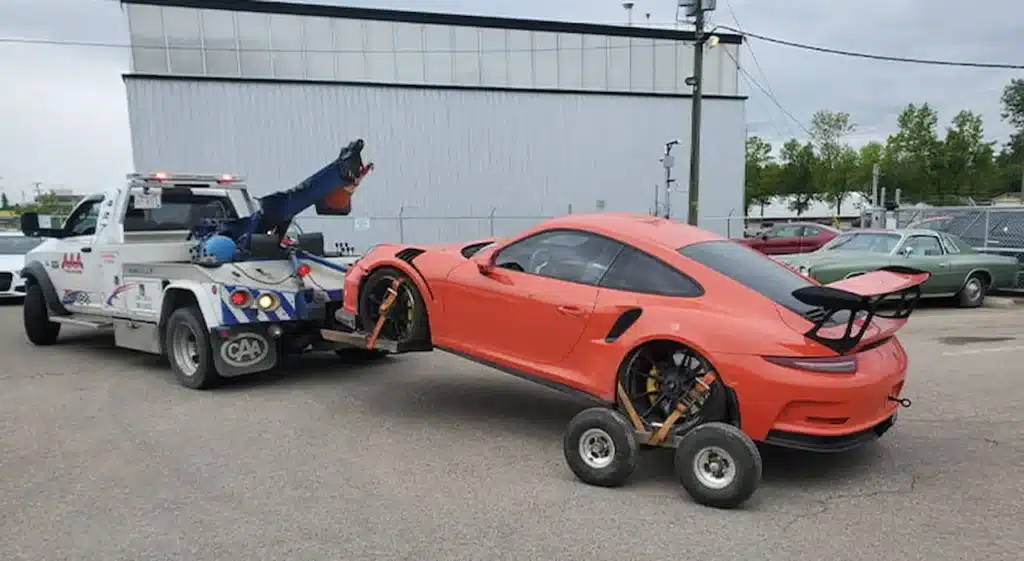
Wheel-lift towing lifts either the front or rear wheels of the vehicle off the ground. It is commonly used for local towing, tight spaces, parking lots, and some roadside situations.
The key is correct contact and correct setup. A tow truck safety certification guide notes that a wheel-lift can cause damage if it contacts any part of the disabled vehicle other than the tires or wheels. This means proper placement matters.
Professional operators know how to position the lift, secure the wheels, use straps correctly, and avoid contact with bumpers, spoilers, body panels, or suspension components.
Wheel-lift towing is not bad. Incorrect wheel-lift towing is the risk.
Myth 4: Flatbed Towing Is Always Required
Fact: Flatbed towing is often the safest option, but it is not always required for every vehicle.
Flatbed towing is excellent because the entire vehicle sits on the truck bed. This keeps all four wheels off the road. It is especially helpful for:
- All-wheel-drive vehicles
- Four-wheel-drive vehicles
- Luxury vehicles
- Low-clearance vehicles
- Accident-damaged vehicles
- Long-distance towing
- Vehicles with wheel or suspension damage
- Cars that should not roll during transport
However, not every situation requires a flatbed. Many vehicles can be safely moved with the correct wheel-lift setup. The towing method should be based on the vehicle and situation, not just a one-size-fits-all rule.
Myth 5: AWD and 4WD Vehicles Can Be Towed Like Any Other Car
Fact: AWD and 4WD vehicles need special care.
This is one of the most important towing safety facts. All-wheel-drive and four-wheel-drive vehicles may need a flatbed or dollies so the wheels do not rotate incorrectly during towing.
If an AWD or 4WD vehicle is towed improperly, it can potentially affect the drivetrain, transfer case, or transmission. That is why a professional towing company should ask about the vehicle type or check the safest towing method before moving it.
AAA notes that flatbeds are best for all-wheel-drive and four-wheel-drive vehicles because the vehicle is completely off the road during transport.
If you drive an AWD or 4WD vehicle and need towing, tell the towing company when you call.
Myth 6: Towing Scratches Paint and Bumpers
Fact: Scratches usually happen because of poor handling, not professional towing.
A properly handled tow should not scratch your paint, bumper, or body panels. Damage can happen if chains, hooks, straps, or wheel-lift equipment are placed incorrectly. Professional operators avoid this by securing the vehicle through approved points and keeping equipment away from painted surfaces whenever possible.
Sun City Towing uses careful towing practices to reduce risk and protect your vehicle during the process. The goal is not just to move the car. The goal is to move it without adding damage.
Myth 7: Lowered Cars Cannot Be Towed Safely
Fact: Lowered cars can be towed safely with the right approach.
Low-clearance vehicles need extra care because bumpers, side skirts, exhaust parts, or underbody components can sit closer to the ground. A careless loading angle can scrape the vehicle.
For lowered cars, flatbed towing is often the better choice. Operators may use ramps, loading techniques, and careful positioning to reduce scraping risk.
If your car is lowered, modified, or has a body kit, mention it when requesting help. That allows the towing company to send the right equipment.
Myth 8: Towing Will Damage the Transmission
Fact: Transmission damage happens when a vehicle is towed incorrectly for its drivetrain type.
The transmission is one of the biggest concerns drivers have. This fear is understandable because improper towing can create problems, especially for certain AWD, 4WD, or automatic transmission vehicles.
But professional towing avoids this by selecting the correct method. Flatbed towing keeps the wheels off the ground. Dollies can also be used in some situations. Wheel-lift towing may be appropriate for certain vehicles when the drive wheels are lifted correctly.
The safest approach is to let trained towing professionals decide the correct method based on your vehicle type.
Myth 9: Accident Vehicles Can Be Driven If They Still Start
Fact: A car that starts after an accident may still be unsafe to drive.
After a collision, hidden damage can affect:
- Steering
- Suspension
- Brakes
- Tires
- Wheels
- Radiator
- Frame
- Lights
- Alignment
- Fluid lines
Even if the engine starts, the car may not be safe. If you notice leaking fluids, broken lights, bent wheels, steering problems, brake issues, or body parts dragging, call for towing instead of driving.
NHTSA’s mission includes reducing injuries and economic costs from motor vehicle crashes through vehicle and road safety work. For drivers, the practical takeaway is simple: after a crash, safety should come before convenience.
How Professional Towing Protects Your Car
Professional towing reduces damage risk by using the right process from the start.
A careful towing operator should:
- Inspect the vehicle before loading
- Choose the correct towing method
- Check the drivetrain type
- Use proper securement points
- Avoid contact with body panels
- Use wheel straps correctly
- Load the vehicle at a safe angle
- Protect low-clearance areas
- Secure the vehicle before transport
- Drive carefully during transport
- Unload the vehicle safely
This is why choosing the right towing company matters. A professional tow is not just about having a truck. It is about knowing how to move different vehicles safely.
Why Sun City Towing Will Not Damage Your Car
Sun City Towing is focused on safe, careful, professional towing. The team understands that your vehicle is valuable, and the goal is to help you without creating new problems.
When you call Sun City Towing, your vehicle is handled with care using the towing method that fits the situation. Whether your car needs a local tow, roadside help, accident recovery, or emergency towing, the process is built around protecting the vehicle during loading, transport, and unloading.
No honest towing company should claim that damage is impossible in every situation, because badly damaged vehicles, unsafe roadside conditions, and unusual mechanical failures can create challenges. But professional towing greatly reduces the risk by using proper equipment, correct securement, and careful handling.
That is the difference with SunCityTow.com: the focus is safe towing, careful service, and helping drivers get out of stressful situations without adding unnecessary damage.
When Flatbed Towing Is the Best Choice
Flatbed towing is often the best option when the vehicle needs extra protection.
Choose or request flatbed towing for:
- AWD vehicles
- 4WD vehicles
- Luxury cars
- Classic cars
- Low-clearance vehicles
- Accident-damaged vehicles
- Vehicles with wheel damage
- Long-distance transport
- Cars that cannot roll safely
- Electric vehicles when required
Flatbed towing keeps the vehicle fully off the road, which can reduce the risk of road debris, drivetrain movement, and tire wear during transport.
Owners of damaged or disabled vehicles may benefit from our professional flatbed towing solutions designed for safe transport and extra vehicle protection.
When Wheel-Lift Towing Can Be Safe
Wheel-lift towing can be safe for many vehicles when used correctly. It is often useful for short local towing, tight spaces, parking lots, and two-wheel-drive vehicles.
Wheel-lift towing may be appropriate when:
- The vehicle is front-wheel drive, and the front wheels are lifted
- The vehicle is rear-wheel drive, and the rear wheels are lifted
- The tow distance is short
- The vehicle has enough clearance
- The tires and wheels can be safely secured
- The operator avoids body contact
The important point is that wheel-lift towing should match the vehicle’s drivetrain and condition.
What You Should Tell the Towing Company
To help protect your car, share important details when you call.
Tell the towing company:
- Vehicle make and model
- Whether it is AWD, 4WD, FWD, or RWD
- Whether it is electric or hybrid
- Whether the car is lowered or modified
- Whether the wheels are damaged
- Whether the vehicle was in an accident
- Whether it rolls or steers
- Whether it is leaking fluid
- Your exact location
- Where the vehicle needs to go
The more information you provide, the easier it is to send the right truck and equipment.
What You Can Do Before the Tow
Before your vehicle is towed, you can take a few simple steps.
If it is safe:
- Take photos of the vehicle
- Remove valuables
- Note existing damage
- Tell the operator about mechanical issues
- Confirm the destination
- Keep your phone available
- Stay away from traffic
- Ask questions if you are unsure
Photos are useful because they create a record of the vehicle’s condition before transport.
Vehicle owners worried about roadside problems should read our complete car breakdown safety guide to understand what steps to take during an unexpected breakdown.
Signs of an Unprofessional Tow
Not every towing experience is the same. Be cautious if an operator:
- Does not ask about the vehicle
- Uses equipment carelessly
- Places chains on body panels
- Rushes the loading process
- Ignores AWD or 4WD concerns
- Does not secure the vehicle properly
- Let’s equipment scrape bumpers
- Does not communicate clearly
- Cannot explain the towing method
Professional towing should feel organized, careful, and safety-focused.
Common Types of Towing Damage and How They Are Prevented
| Possible Damage | Common Cause | How Professionals Prevent It |
| Bumper scratches | Wrong loading angle or careless hook placement | Proper ramps, careful loading, correct securement |
| Transmission issues | Wrong towing method for drivetrain | Flatbed, dollies, or correct drive-wheel lifting |
| Tire damage | Poor securement or dragging | Wheel straps and proper positioning |
| Suspension stress | Incorrect hook points | Approved towing points and proper equipment |
| Paint scratches | Chains or straps touching body panels | Equipment kept away from painted surfaces |
| Undercarriage scraping | Low clearance loading | Flatbed, ramps, and careful angle control |
When You Should Call Sun City Towing
Call Sun City Towing if your vehicle cannot be driven safely or if you need roadside assistance.
You may need help with:
- Car breakdown
- Dead battery
- Flat tire
- Accident towing
- Engine overheating
- Lockout
- Fuel issue
- Transmission problem
- Brake problem
- Vehicle stuck
- Emergency towing
Visit SunCityTow.com when you need towing help and want your vehicle handled with care.
Conclusion
So, can towing damage your car? Yes, it can happen when towing is done incorrectly. But professional towing is designed to prevent damage by using the right equipment, the correct method, and careful handling.
The biggest myths stem from assuming all vehicles can be towed the same way or that every tow-truck method is inherently risky. The facts are clear: flatbed towing, wheel-lift towing, dollies, proper straps, correct contact points, and trained operators all help protect your car.
Sun City Towing will not intentionally damage your car and uses careful towing practices to protect your vehicle during the towing process. If you need immediate towing or roadside assistance, contact our local towing support team for safe and professional help anytime.
FAQs
Can towing damage your car?
Towing can damage a car if the wrong method or equipment is used. However, professional towing is designed to prevent damage by selecting the right towing method for the vehicle.
Is flatbed towing safer than regular towing?
Flatbed towing is often considered one of the safest methods because the vehicle is carried completely off the road. AAA notes that flatbeds are especially useful for damaged vehicles, AWD vehicles, and 4WD vehicles.
Can wheel-lift towing damage my car?
Wheel-lift towing can be safe when used correctly. It can cause damage if the lift contacts body parts instead of the tires or wheels, which is why proper operator technique matters.
Can towing damage an AWD vehicle?
Yes, an AWD vehicle can be damaged if towed incorrectly. Many AWD vehicles should be moved by flatbed or with proper dollies to prevent drivetrain stress.
Can towing damage the transmission?
Transmission damage is possible if the drive wheels are towed incorrectly. A professional towing company prevents this by using flatbed towing, dollies, or the correct wheel-lift setup.
Should I ask for a flatbed tow truck?
You should ask for a flatbed if your vehicle is AWD, 4WD, luxury, lowered, accident-damaged, or needs long-distance transport. A towing professional can also recommend the safest method.
Will Sun City Towing damage my car?
Sun City Towing is focused on safe, careful towing and uses professional methods to protect your vehicle. No towing company can honestly promise that every damaged or unusual roadside situation has zero risk, but Sun City Towing works to prevent damage through proper handling and equipment.
Where can I get towing help?
You can visit SunCityTow.com and call Sun City Towing when you need towing, roadside assistance, or emergency help.