What to Do After a Tire Blowout on the Highway: A Complete Safety Guide
A tire blowout on the highway can happen without warning and quickly turn into a dangerous situation. Whether you are driving through Sacramento or traveling on nearby highways, knowing how to respond can protect you, your passengers, and other drivers on the road.
I have seen many highway emergencies where drivers reacted by braking hard or making sudden steering movements. Unfortunately, these actions often make the situation worse. Staying calm and following the correct steps can help you regain control and reduce the risk of an accident.
At Sun City Tow, we respond to highway breakdowns and roadside emergencies every day. Based on our experience assisting drivers throughout Sacramento, this guide explains exactly what you should do after a tire blowout and when it is safest to call for professional help.
Stay Calm and Keep Control of the Vehicle
The first few seconds after a tire blowout are the most important. A loud bang followed by the vehicle pulling to one side is completely normal, but panic can make the situation much worse.
We always advise drivers to keep both hands firmly on the steering wheel and focus on maintaining control.
After a blowout you should:
- Hold the steering wheel firmly.
- Keep the vehicle moving straight.
- Avoid sudden steering corrections.
- Let the vehicle slow down naturally.
Many highway accidents happen because drivers overreact instead of allowing the vehicle to stabilize.
Do Not Slam on the Brakes
Your first instinct may be to brake immediately, but this can increase the risk of losing control.
Instead:
- Ease off the accelerator.
- Let the vehicle slow gradually.
- Brake gently only after the vehicle becomes stable.
- Maintain your lane whenever possible.
Sudden braking shifts weight onto the damaged tire, making steering much more difficult.
Move to a Safe Location
Once your speed has reduced, carefully move toward the shoulder or another safe area away from moving traffic.
Choose a location that provides enough space for both you and roadside responders.
If your vehicle cannot safely continue moving, it is better to request emergency towing services than risk driving on a damaged wheel.
Turn on Your Hazard Lights
Hazard lights alert other drivers that your vehicle is disabled.
Always remember to:
- Turn on your hazard lights immediately.
- Stay inside the vehicle if traffic is heavy.
- Exit only when it is completely safe.
- Keep passengers away from traffic.
Visibility is especially important during nighttime or poor weather conditions.
Inspect the Tire Damage Carefully
After reaching a safe location, inspect the damaged tire only if traffic conditions allow.
Look for:
- Torn sidewalls
- Completely shredded tread
- Bent wheels
- Suspension damage
- Multiple flat tires
If the wheel or suspension appears damaged, driving further could cause additional mechanical problems.
Many similar emergency situations are covered in our guide on what to do if your car breaks down on a highway.
Decide Whether You Can Change the Tire
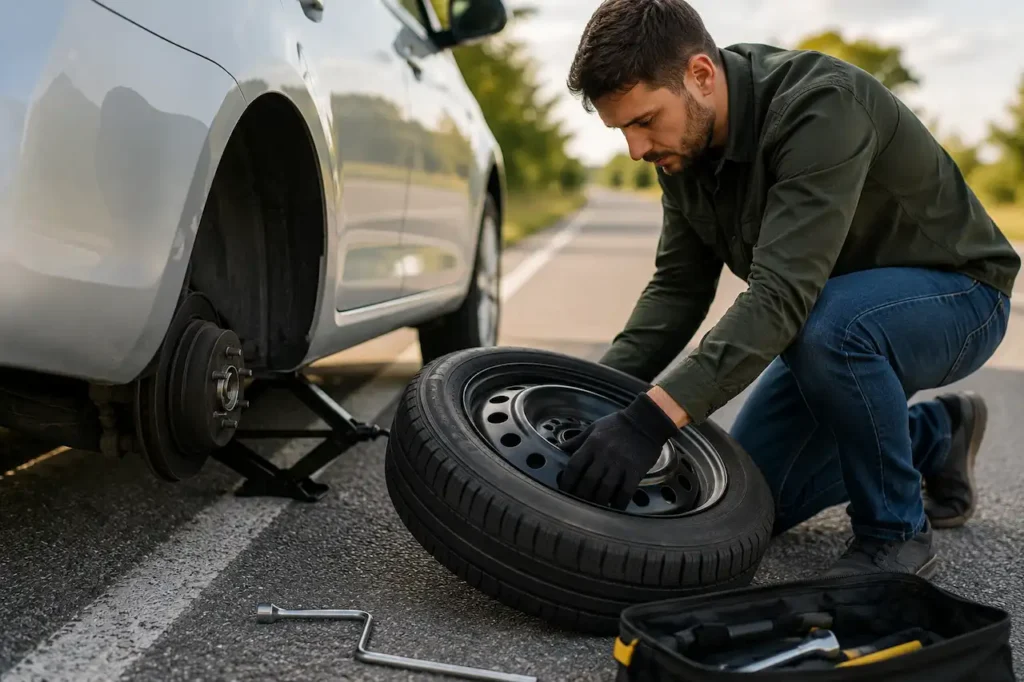
Not every blowout requires towing, but not every situation is safe for a roadside tire change either.
A roadside tire replacement may be possible if:
- You have a usable spare tire.
- The vehicle is completely off the roadway.
- The weather is safe.
- You have the proper tools.
If changing the tire safely is not possible, our roadside tire change service can help you return to the road quickly.
When You Should Call a Tow Truck
Professional towing is the safest option in many highway emergencies.
Call a tow truck if:
- The wheel is damaged.
- Multiple tires have failed.
- The vehicle will not move safely.
- You are on a busy freeway.
- The suspension appears damaged.
- You do not have a spare tire.
A flatbed towing service is often the safest method because it keeps all four wheels off the ground and helps prevent additional damage during transport.
How to Prevent Future Tire Blowouts
Although tire blowouts cannot always be avoided, regular maintenance greatly reduces the risk.
We recommend:
- Checking tire pressure every month.
- Inspecting tread depth regularly.
- Replacing worn tires promptly.
- Avoiding overloaded vehicles.
- Rotating tires according to manufacturer recommendations.
- Checking tires before long highway trips.
Routine maintenance is one of the easiest ways to improve road safety.
Why Professional Highway Assistance Matters
Highway breakdowns create serious safety risks, particularly on busy roads around Sacramento.
Professional roadside teams arrive with the proper equipment, safety lighting, and training to manage roadside emergencies efficiently.
Whether you need a tire replacement, emergency towing, or full roadside recovery, our roadside assistance services are available to help drivers across the Sacramento area.
Why Choose Us
We provide fast, reliable roadside assistance and towing services throughout Sacramento with a strong focus on safety and customer care.
- 24-hour emergency response
- Fast highway roadside assistance
- Professional tire change services
- Modern flatbed tow trucks
- Licensed and insured operators
- Transparent pricing with no hidden fees
- Experienced local towing professionals
If you need immediate assistance after a highway tire blowout, contact Sun City Tow for fast, dependable roadside support anywhere in Sacramento.
FAQs
What should I do immediately after a tire blowout?
Stay calm, keep both hands on the steering wheel, ease off the accelerator, and safely move to the side of the road.
Should I brake immediately after a tire blows out?
No. Sudden braking can cause you to lose control. Slow down gradually before braking gently.
Can I continue driving after a tire blowout?
Only if the vehicle remains safe to operate. If the wheel or suspension is damaged, call for professional towing.
Is it safe to change a tire on the highway?
Only if you are completely off the roadway and conditions are safe. Otherwise, request roadside assistance.
When should I call a tow truck after a blowout?
Call a tow truck if the vehicle cannot be driven safely, the wheel is damaged, or changing the tire is unsafe.